


one&two
Improving Access to Public Restrooms in Urban Environments.
Project Type
Startup | Mobile B2C Product | MVP
My Role
Co-Founder & Product Designer
Team
Co-Founder (Business & Strategy)Product Designer (Me)
Timeline
2024 – 2025
Project Duration12 Months

Product Description
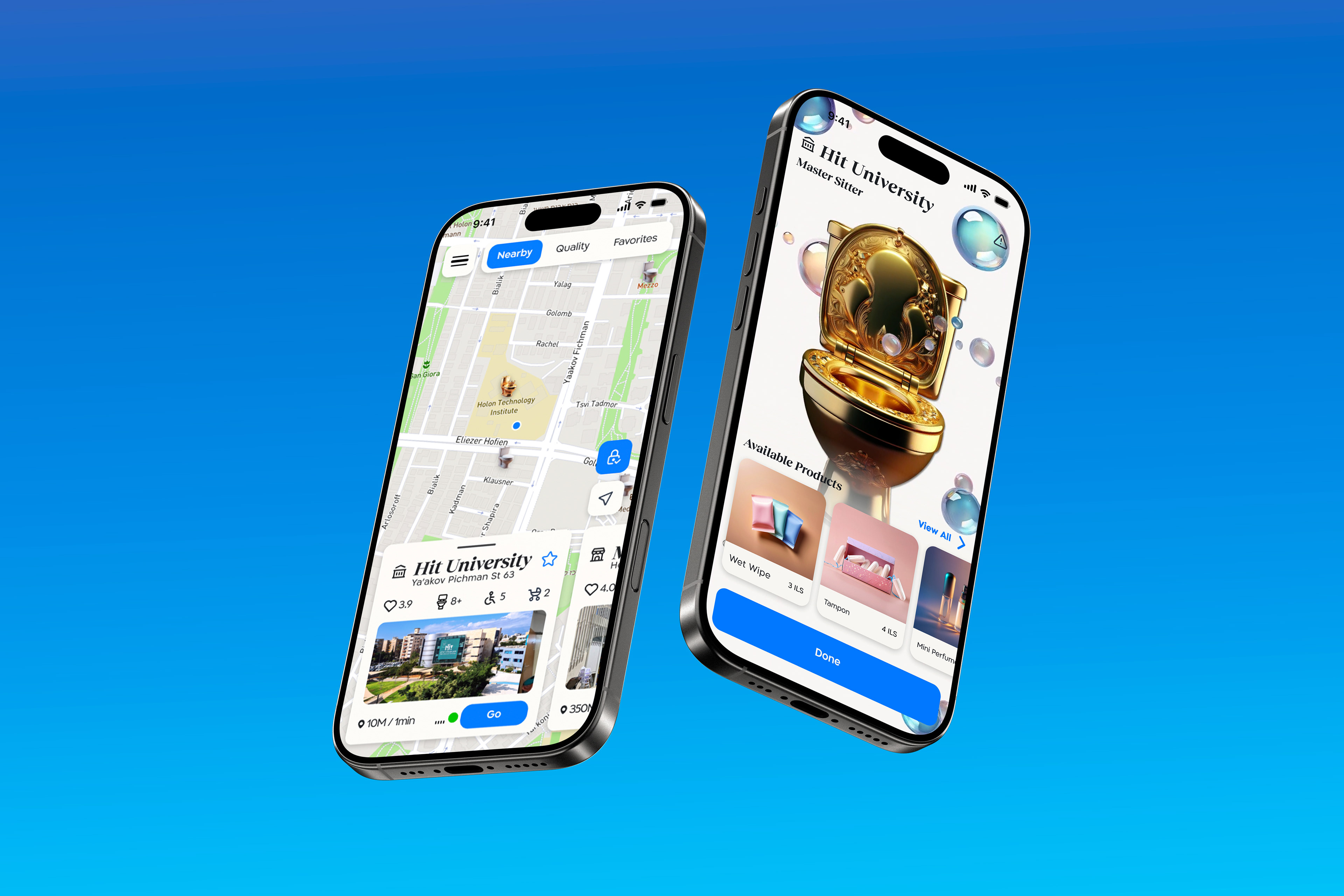
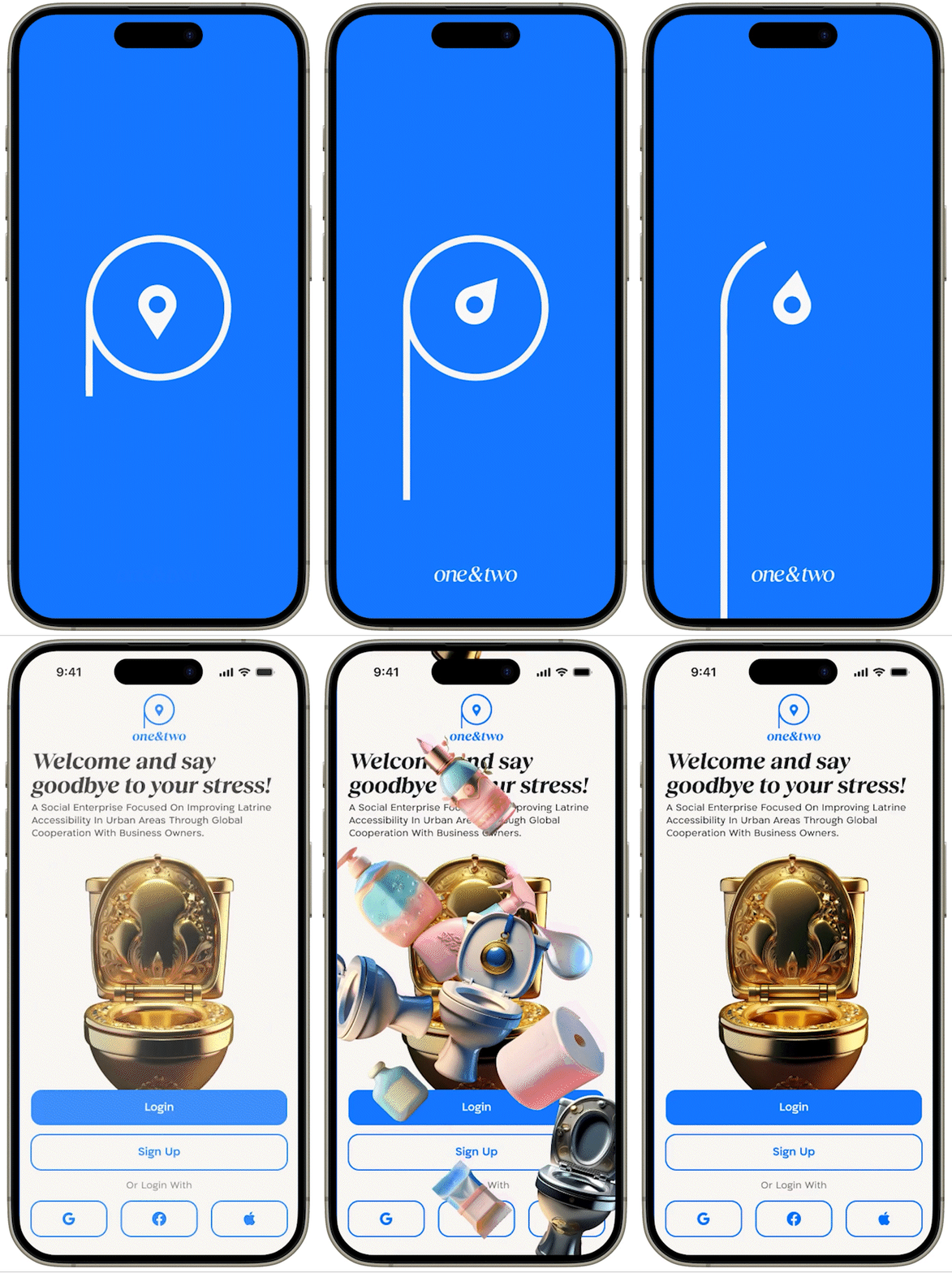
One&Two is a location-based mobile application designed to help users easily find, access, and navigate to clean and reliable public restrooms in urban environments.
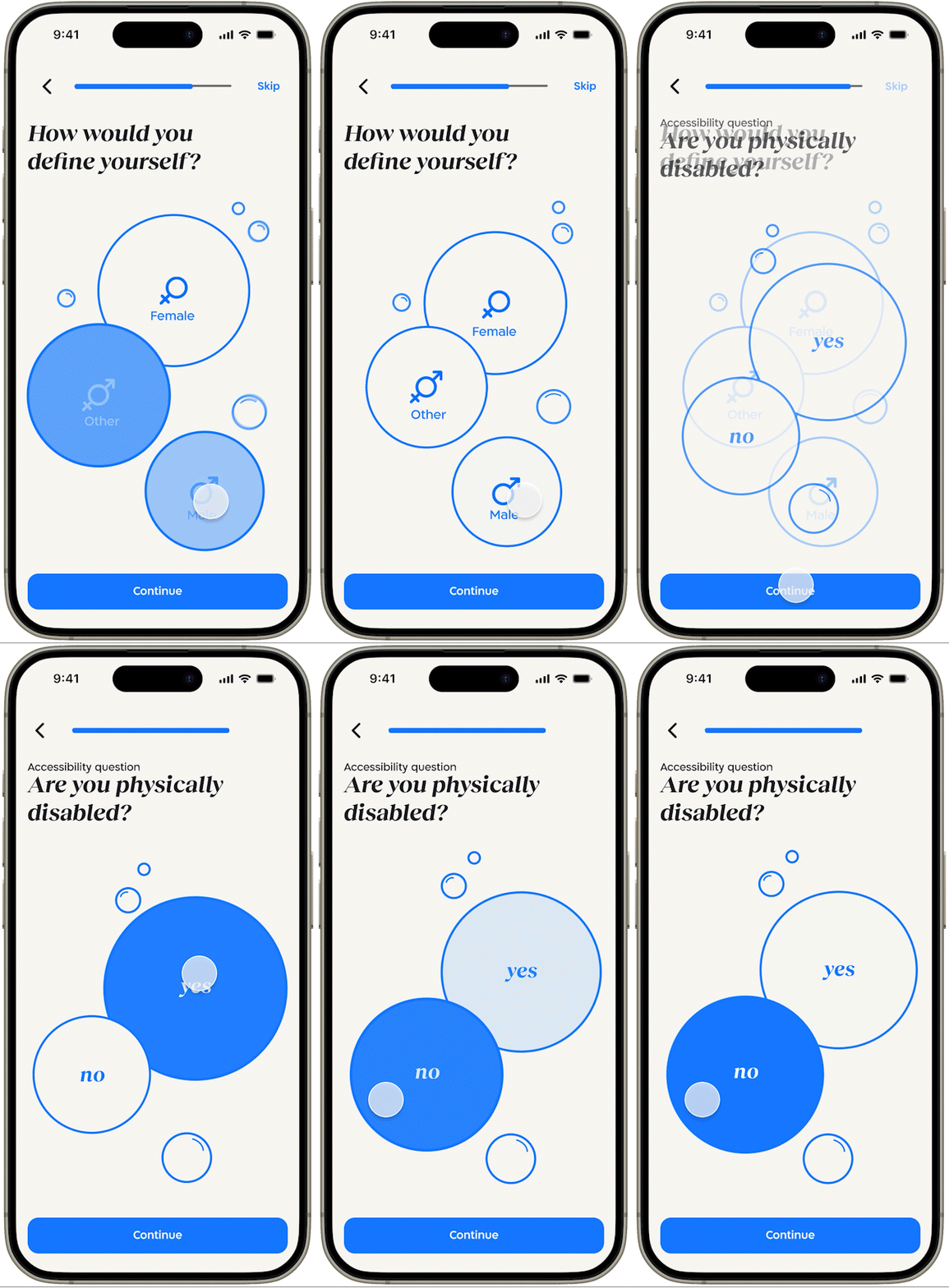
Personalized Accessibility
During registration, users answer a few questions to match restrooms to their needs. For example, people with disabilities find accessible facilities, and parents locate restrooms with changing stations. The system learns user habits to improve future searches.
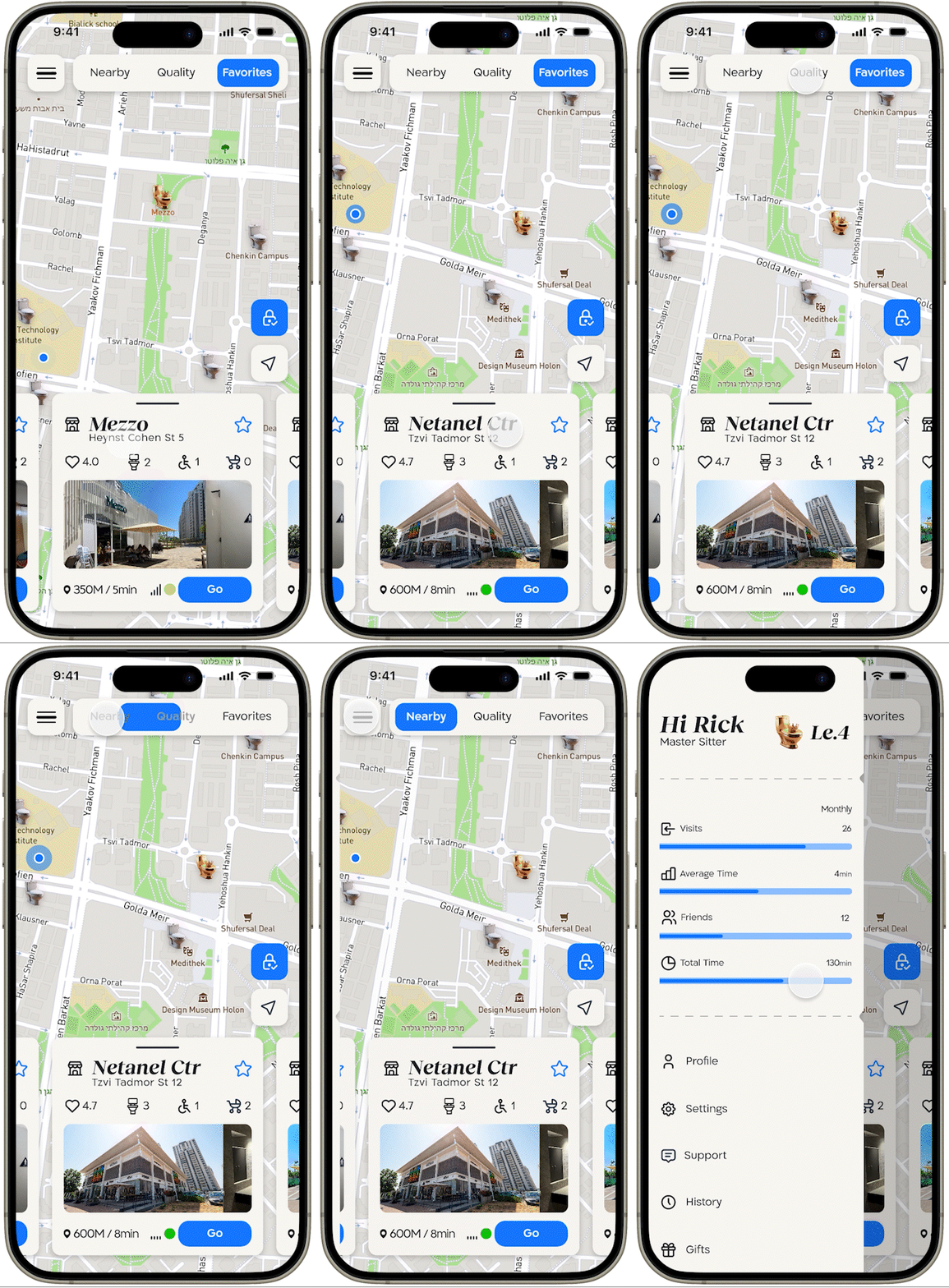
Real Time Map Interface
One&Two provides 24/7 support to help you find restrooms wherever you are. Its interactive map updates in real-time and lets you choose between three options:
- Nearby: the closest available restrooms.
- Quality: the highest-rated, cleanest restrooms.
- Favorites: places you’ve saved and want to visit again.
You can filter by accessibility and availability, and get clear directions perfect for emergencies or exploring new areas. One&Two ensures a smooth, stress-free experience anytime.
Instant QR Access for Restrooms
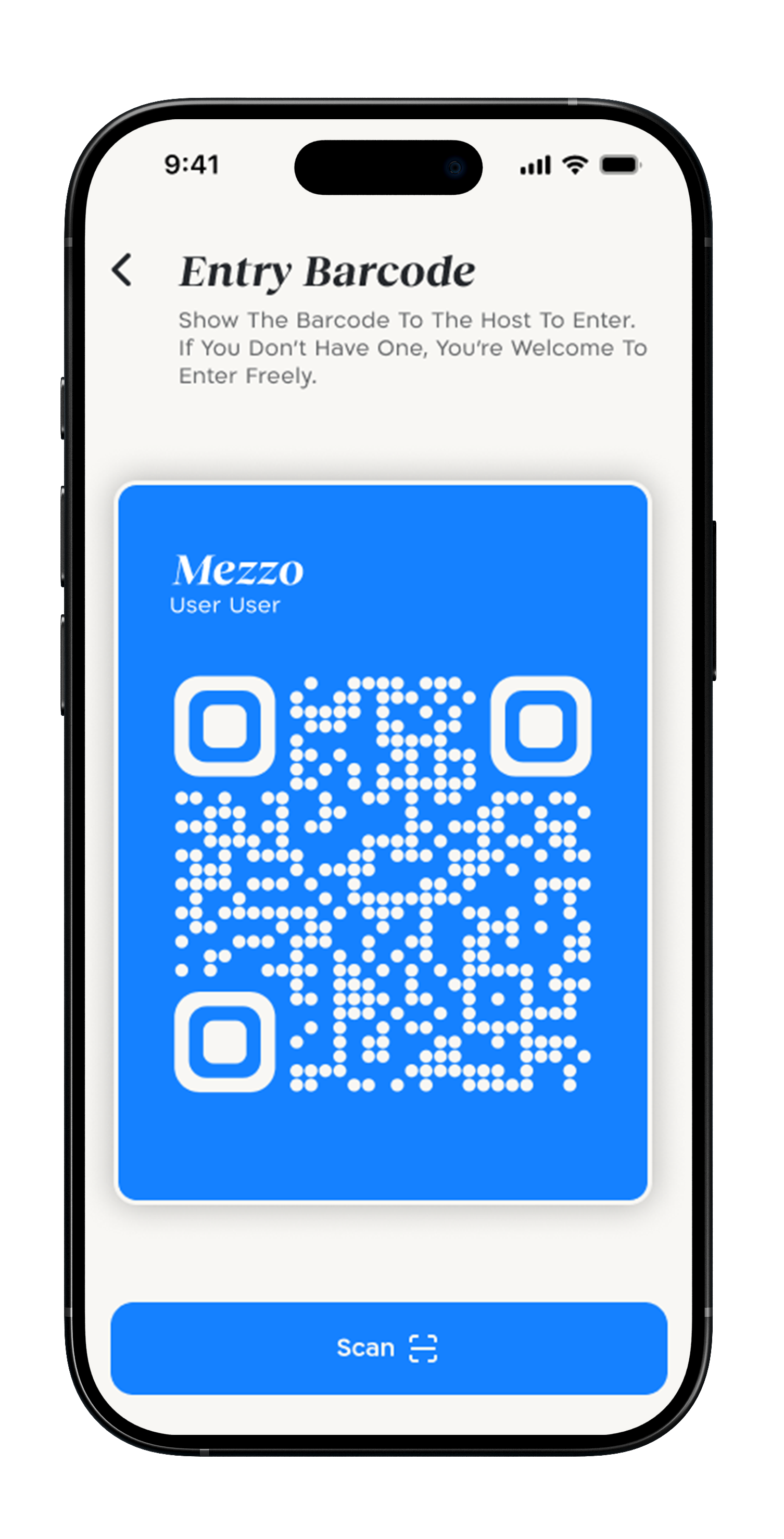
One&Two makes restroom access easy with its instant QR code feature. After choosing a restroom in the app, you get a unique QR code to unlock the door with a quick scan. This gives you fast, smooth, and contactless entry saving time and avoiding hassle.
Hygiene Products Store Feature
Users can discreetly buy hygiene products like wipes, toilet paper, soaps, and sanitizers directly through the app while in the restroom. The service is available 24/7 thanks to partner stores that work with the app. This ensures easy access to essentials anytime, especially in cities, while keeping the experience private and comfortable.
User Ratings and Incentives
One&two uses gamification to boost engagement. Users rate restrooms, earn points, and get rewards like:
- Custom Toilet Skins: unlock fun virtual toilets, from basic white to golden, as they stay active.
- Store Discounts: get vouchers for local businesses. This keeps users involved and loyal to the app.

Case Study
The Problem
The idea for One&Two originated from a personal experience. During a busy day in Tel Aviv, I struggled to find a clean and accessible public restroom. Despite being in a dense urban area, none of the available options met basic hygiene or accessibility expectations.
This experience exposed a broader systemic issue: even in modern cities, users struggle to locate reliable public restrooms. Existing solutions lack real-time accuracy, hygiene standards, accessibility filters, or transparent pricing. For vulnerable groups such as parents with babies, tourists, and people with disabilities, this becomes more than an inconvenience it becomes a daily friction point that impacts comfort, mobility, and time efficiency.
Target Audience
Parents with babies and toddlers
Tourists unfamiliar with the city
Urban professionals far from home
People with disabilities
Survey
What should we focus on to improve restroom accessibility and hygiene in urban areas?
Starting with user behavior analysis and urban infrastructure studies, I began to understand the gaps in restroom availability and accessibility. Additionally, I uncovered a growing need for real-time solutions tailored to diverse user groups, highlighting opportunities for a more inclusive and efficient system.
Demand for Public Restrooms
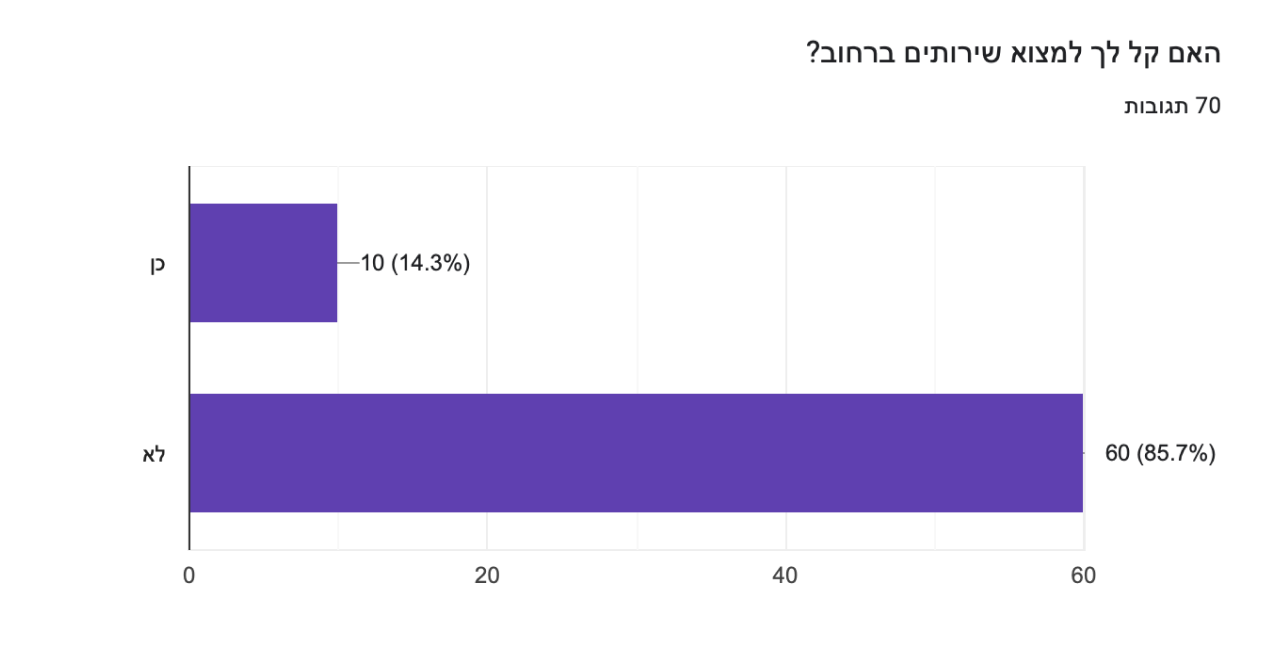
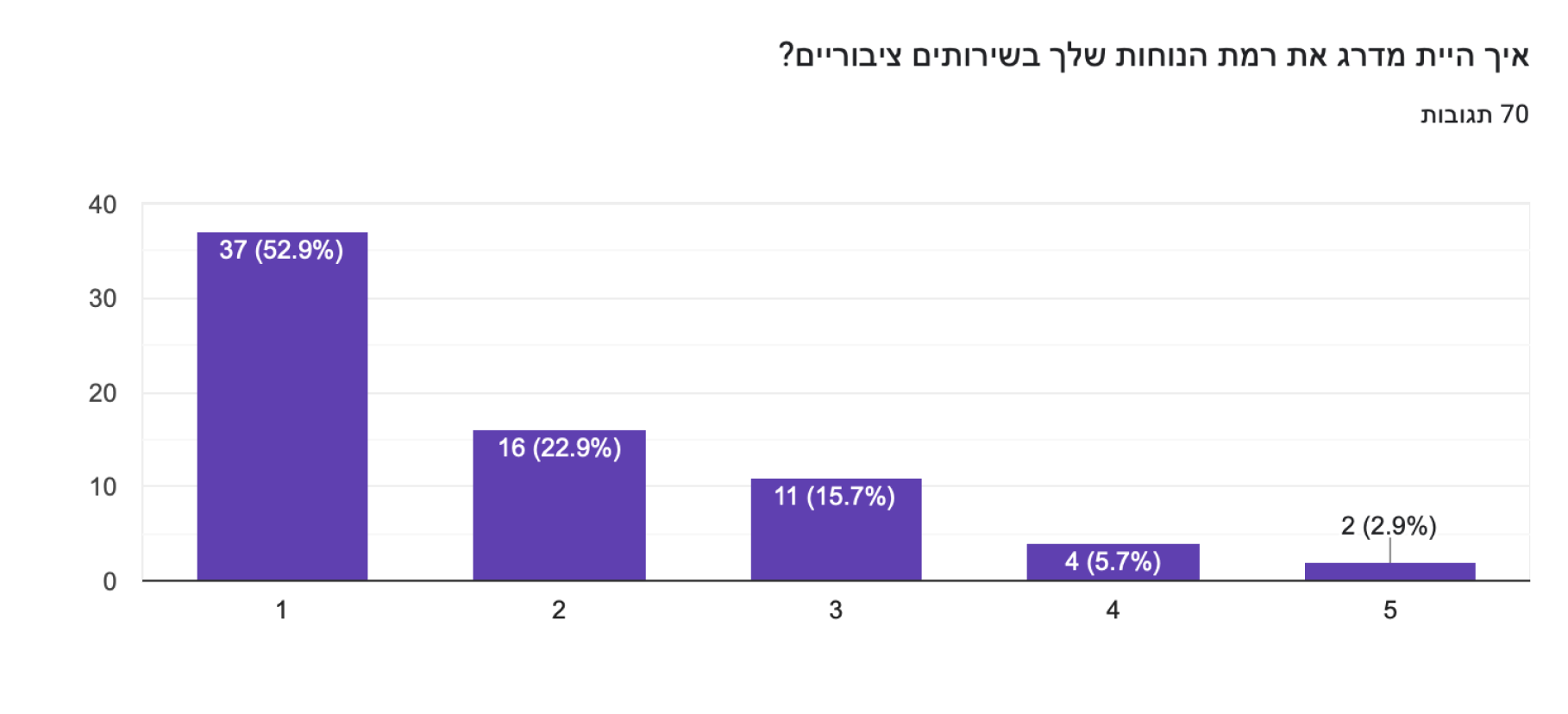
Participants reported low comfort levels in public restrooms, emphasizing the need for improved maintenance and hygiene. Even in commercial locations, there is room for improvement in cleanliness and accessibility.
Challenges Identified
Key issues include:
- Lack of Hygiene: Dirty facilities and bad odors.
- Difficulty Locating Restrooms: Particularly in unfamiliar areas.
- Shortage of Supplies: Essentials like toilet paper and hygiene products are often missing.
Challenges Identified
Key issues include:
- Lack of Hygiene: Dirty facilities and bad odors.
- Difficulty Locating Restrooms: Particularly in unfamiliar areas.
- Shortage of Supplies: Essentials like toilet paper and hygiene products are often missing.
Willingness to Pay
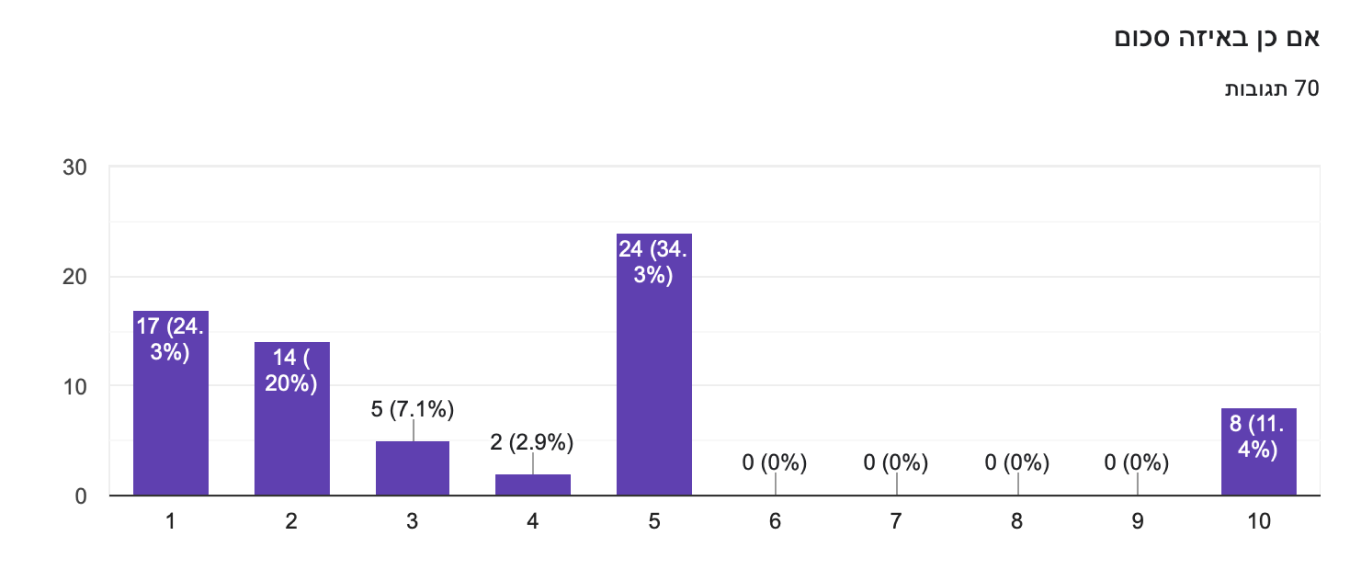
Participants are open to paying 2–5 NIS for access to clean restrooms, validating the app's pricing model.
Accessibility and Inclusiveness
Many facilities are not suitable for people with disabilities or families. Participants highlighted the need for improved accessibility and features like diaper-changing stations.
Opportunities for Improvement
Suggestions included:
- Enhanced hygiene standards.
- More accessible and strategically located facilities.
- Real-time updates and user feedback integration.
Opportunities for One&Two:
- User-Centric App: Real-time updates, cleanliness ratings, and tailored recommendations.
- Community Engagement: Encouraging feedback and offering incentives for user contributions.
- Business Integration: Partnering with businesses to provide restrooms and boost customer traffic.
- Complementary Services: Dispensers for hygiene products in restrooms.
Why One&Two Stands Out?
For Users: A seamless way to find clean, accessible restrooms. For Businesses: A tool to increase visibility and revenue.For Communities: Improving urban hygiene and accessibility standards.One&Two bridges critical gaps in public restroom services, creating value for users, businesses, and urban communities alike.
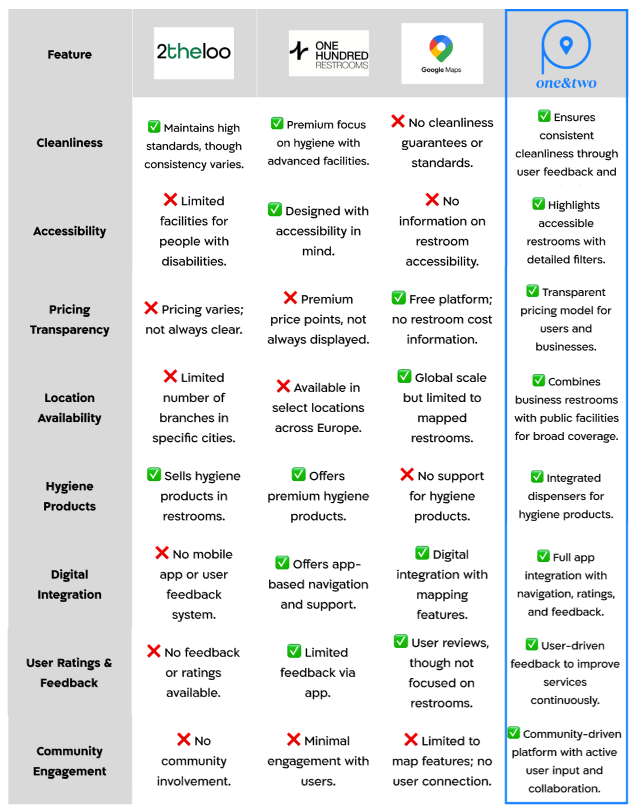
Key Takeaways:
- 2theloo focuses on providing clean restrooms with basic hygiene product availability but lacks digital integration and accessibility features.
- One Hundred Restroom excels in premium hygiene and accessibility but is limited by location and high costs.
- Google Maps provides global location services but lacks detailed restroom-specific features like cleanliness, accessibility, and feedback.
- One&Two combines the strengths of all competitors, providing a comprehensive platform for clean, accessible restrooms with transparent pricing, integrated hygiene solutions, and user-driven feedback.
This comparison highlights One&Two as a user-focused and community-driven solution designed to fill the gaps left by existing services.
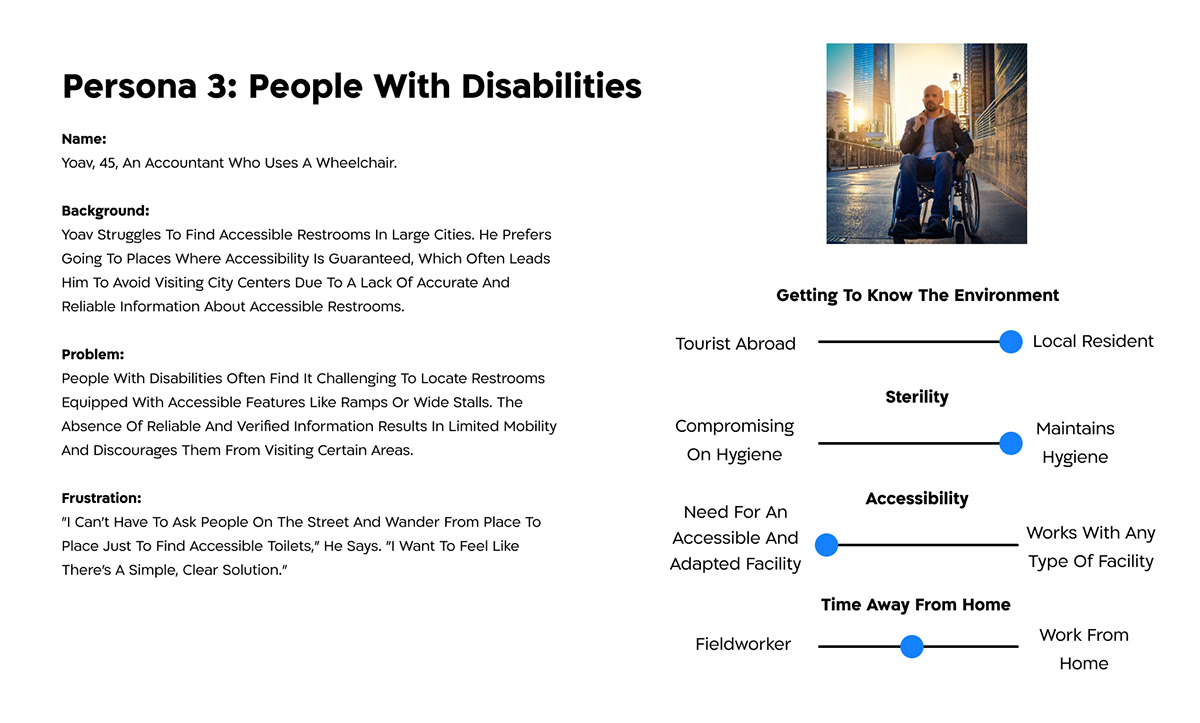
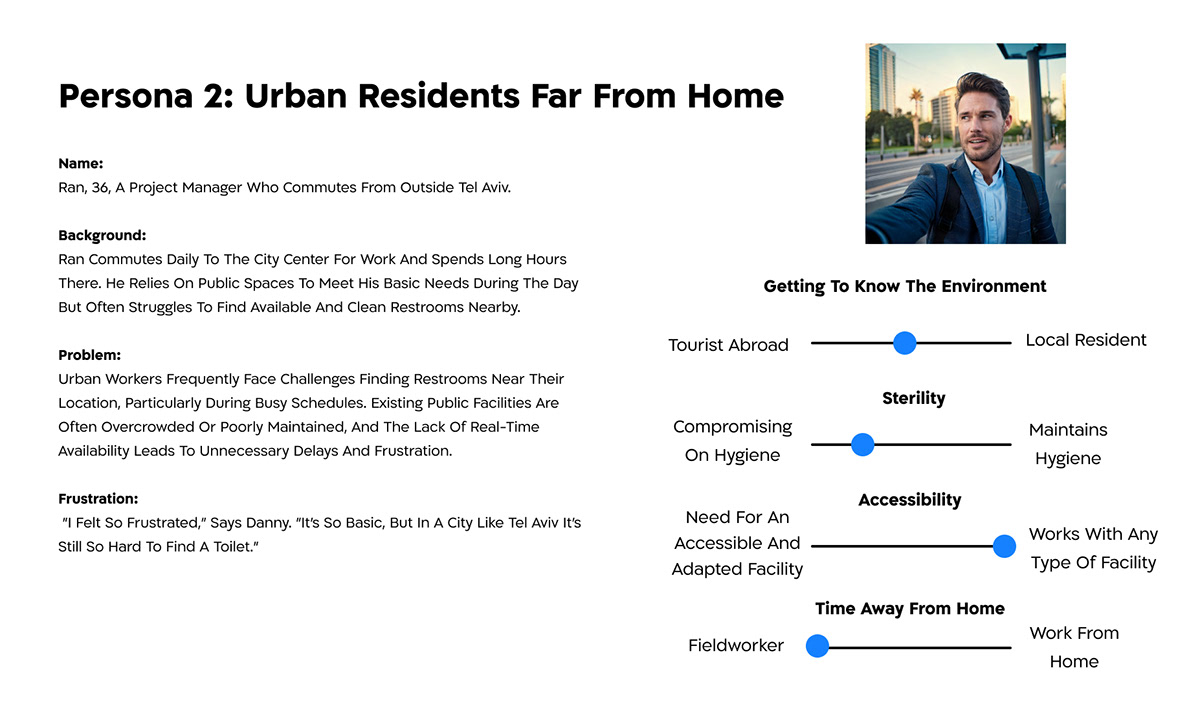
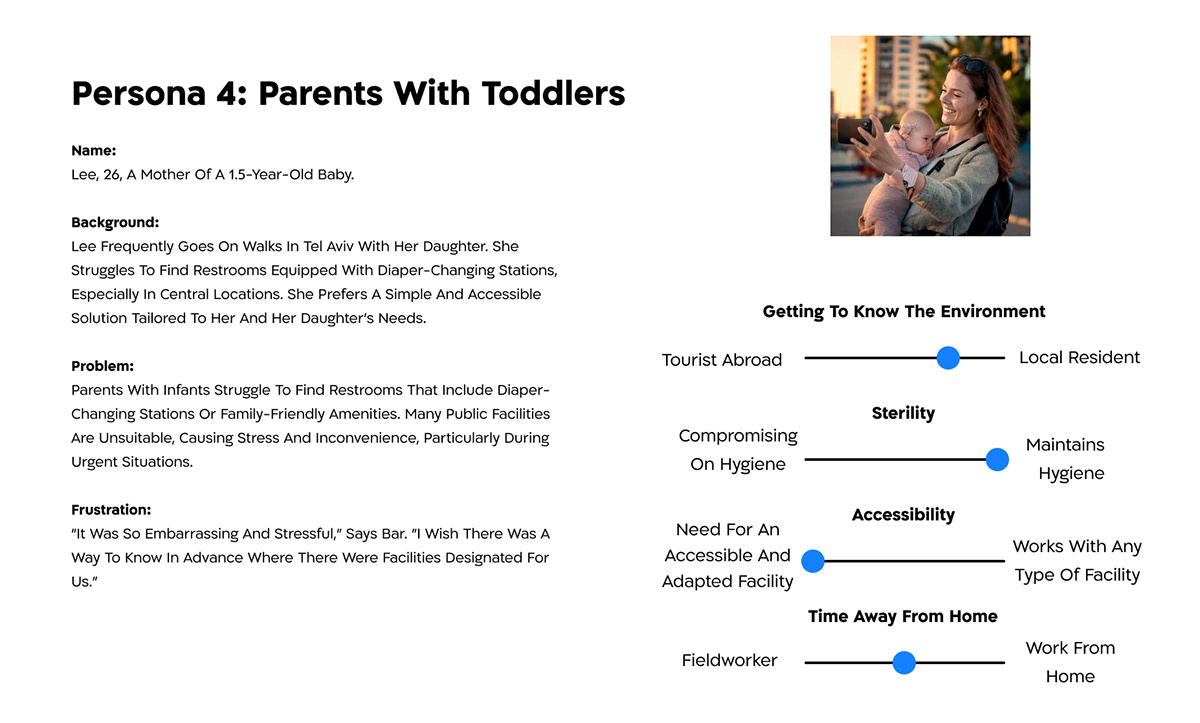
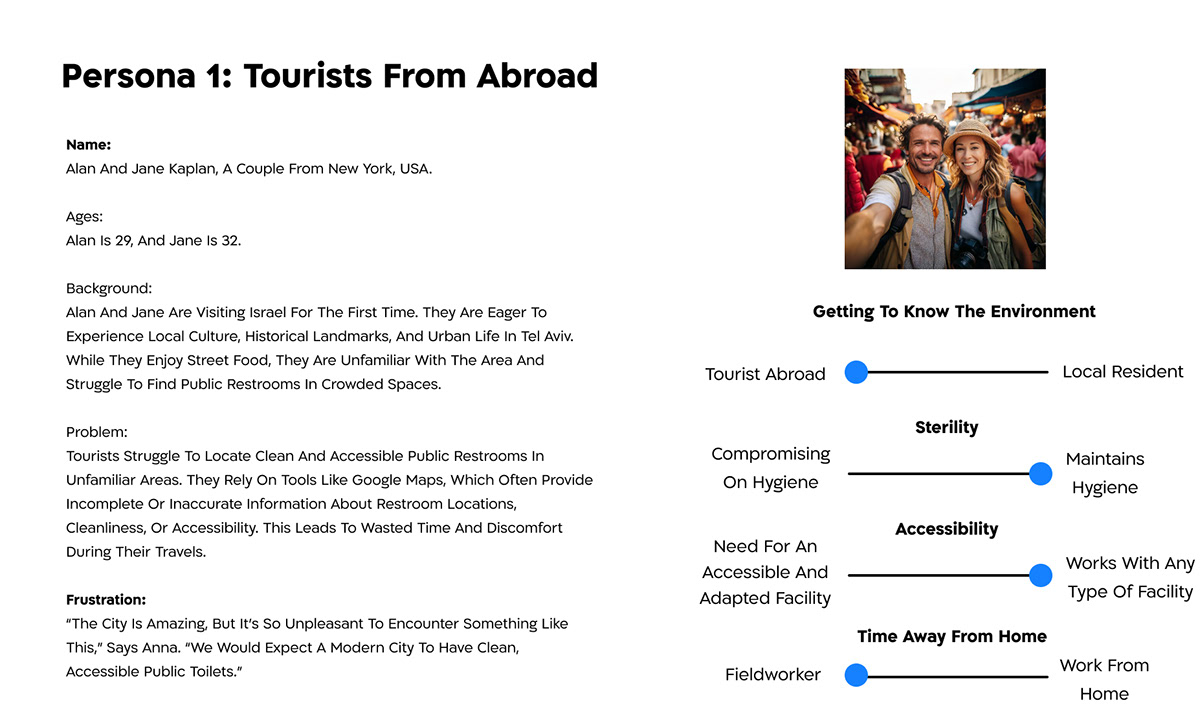
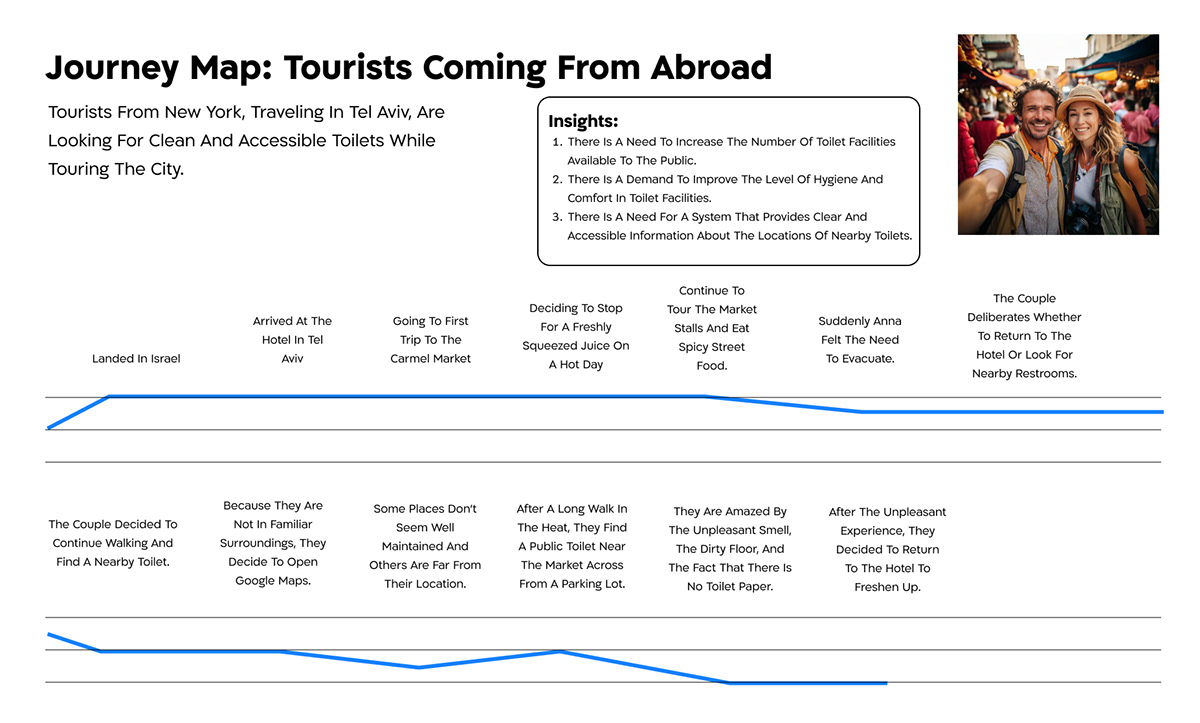
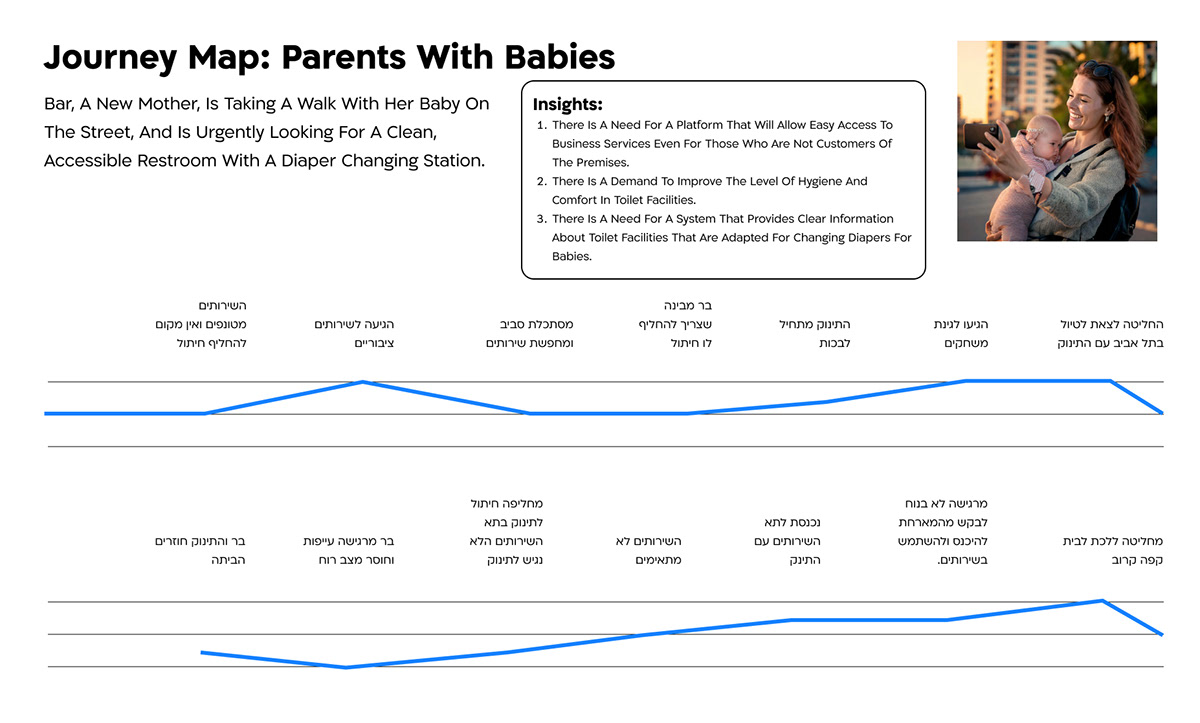
User Persona & Journey MapBased on the personas provided, we identified distinct user groups with unique needs and challenges when accessing restrooms. These personas helped shape the solutions and features offered by One&Two
Key Insights
Fast Access to Restrooms
In my research, I discovered that users especially elderly people, parents with babies, people with disabilities, and tourists often search for public restrooms in stressful situations where time is critical. The speed of finding and accessing restrooms directly affects user satisfaction and their willingness to use the app again. To solve this, I designed a smart map with a one-click quick search for nearby restrooms, including real-time availability filters.
Clear Accessibility Information
My research showed that very few public restrooms are truly accessible for people with disabilities, creating discomfort and stress in urban environments. Parents with strollers, elderly people, and people with special needs must know in advance if a restroom is suitable for them. Trust and repeated use depend on clear, reliable information about accessibility and available facilities, such as baby changing stations or wide doors. To address this, I developed a clear tagging and icon system that instantly shows accessibility levels, with filters for personal needs giving users confidence and reducing uncertainty in unfamiliar places.
Easy Access to Hygiene Products
Many users especially women feel uncomfortable when they run out of hygiene products like tampons, pads, or wipes, and buying them in public spaces can feel awkward or inconvenient. Easy access to hygiene products inside restroom areas increases comfort, safety, and usability, especially in unfamiliar urban environments. I added a feature that shows whether a hygiene dispenser is available in the restroom and its exact location. I also included an option to rate product availability and report when items run out, ensuring reliability and convenience for all users.
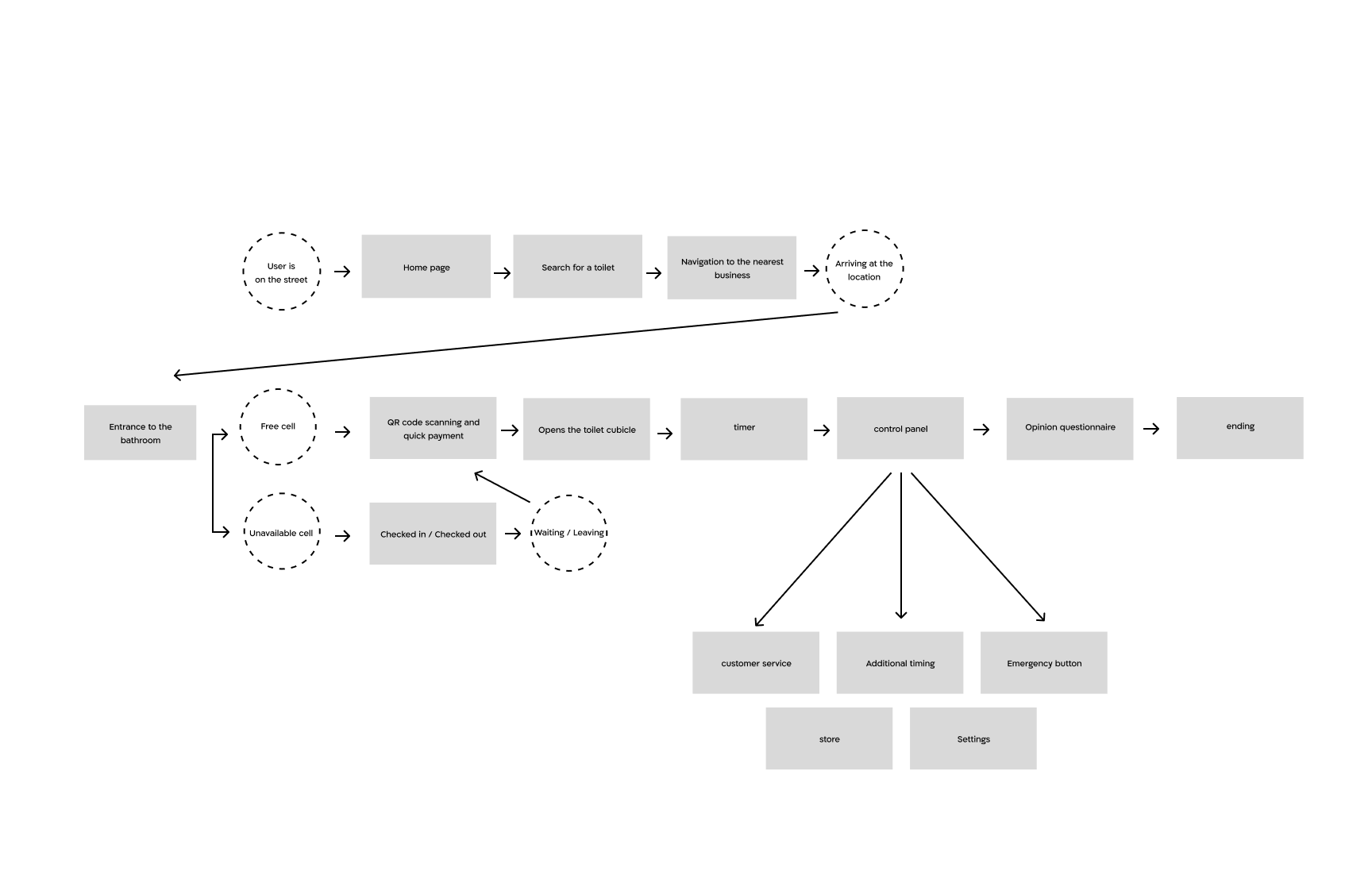
User Persona & Journey MapDuring my initial design process, I create a flow that outlines user interactions and identifies key user needs. Then, I move on to Design Exploration, experimenting with various sketches, styles, and visual approaches.
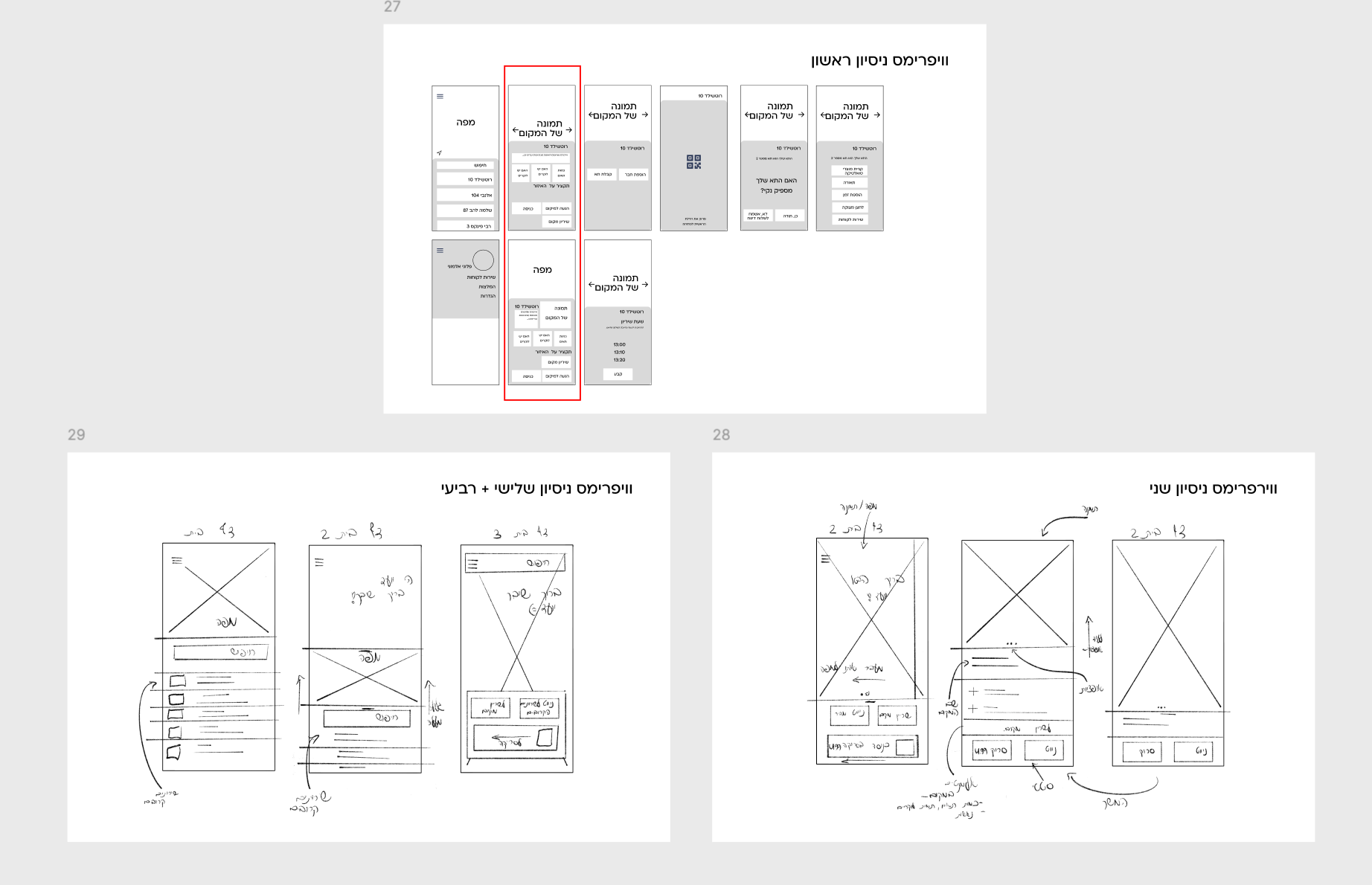
Lo Fi Wireframing
I produced wireframes for multiple design variations for testing and feedback.
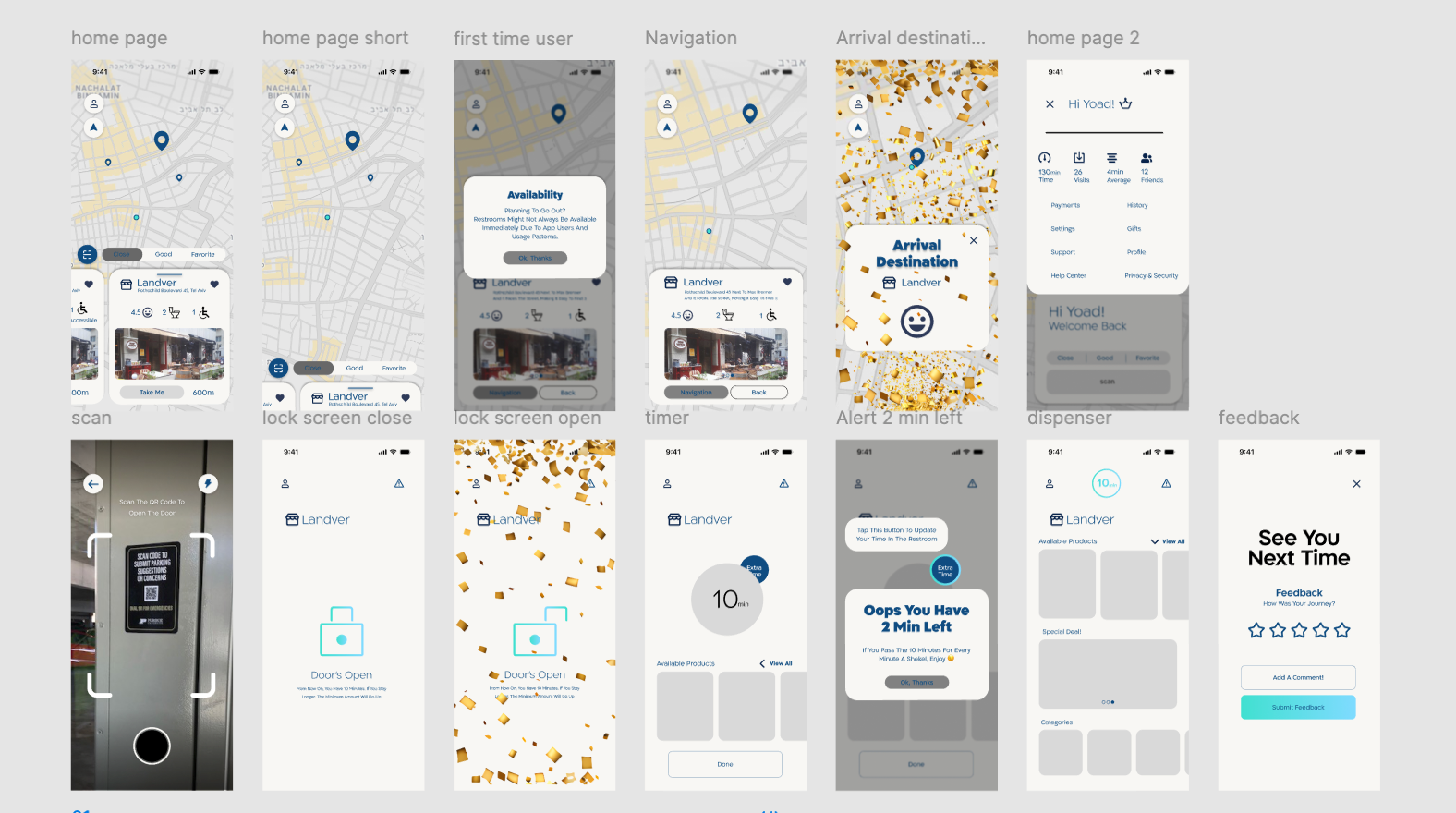
Visual Style
I chose the combination of blue and white to convey a sense of cleanliness, order, and high aesthetic reflecting the ideal experience I want users to feel when entering a clean, welcoming public restroom. Beyond the visual clarity, this color pairing is also symbolic: blue and white are the national colors of Israel, subtly referencing the cultural origin of the project. This choice creates both a visual and emotional connection, while supporting an interface that feels bright, trustworthy, and accessible.
More Projects
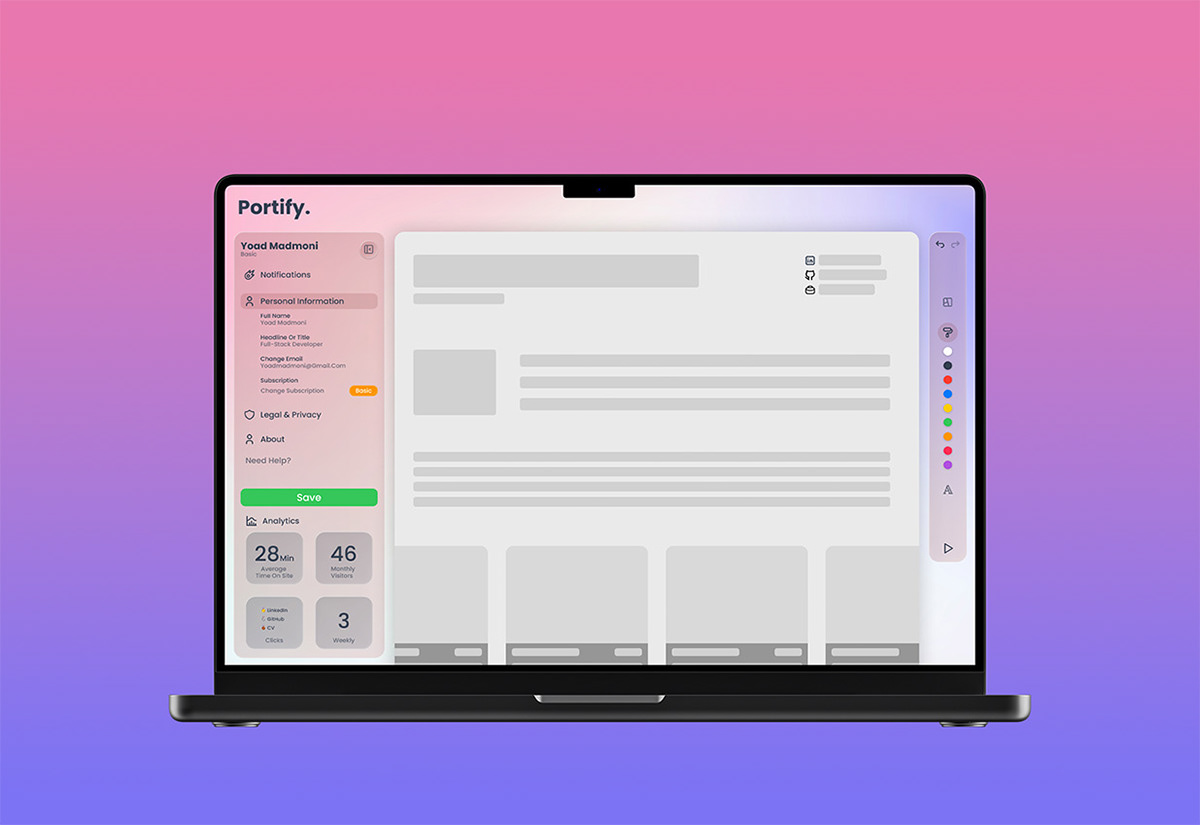
Portify
2025
AI Tools, Portfolio Builder, Career Tools, AI Assistance, UX Thinking, No-Code Creation.
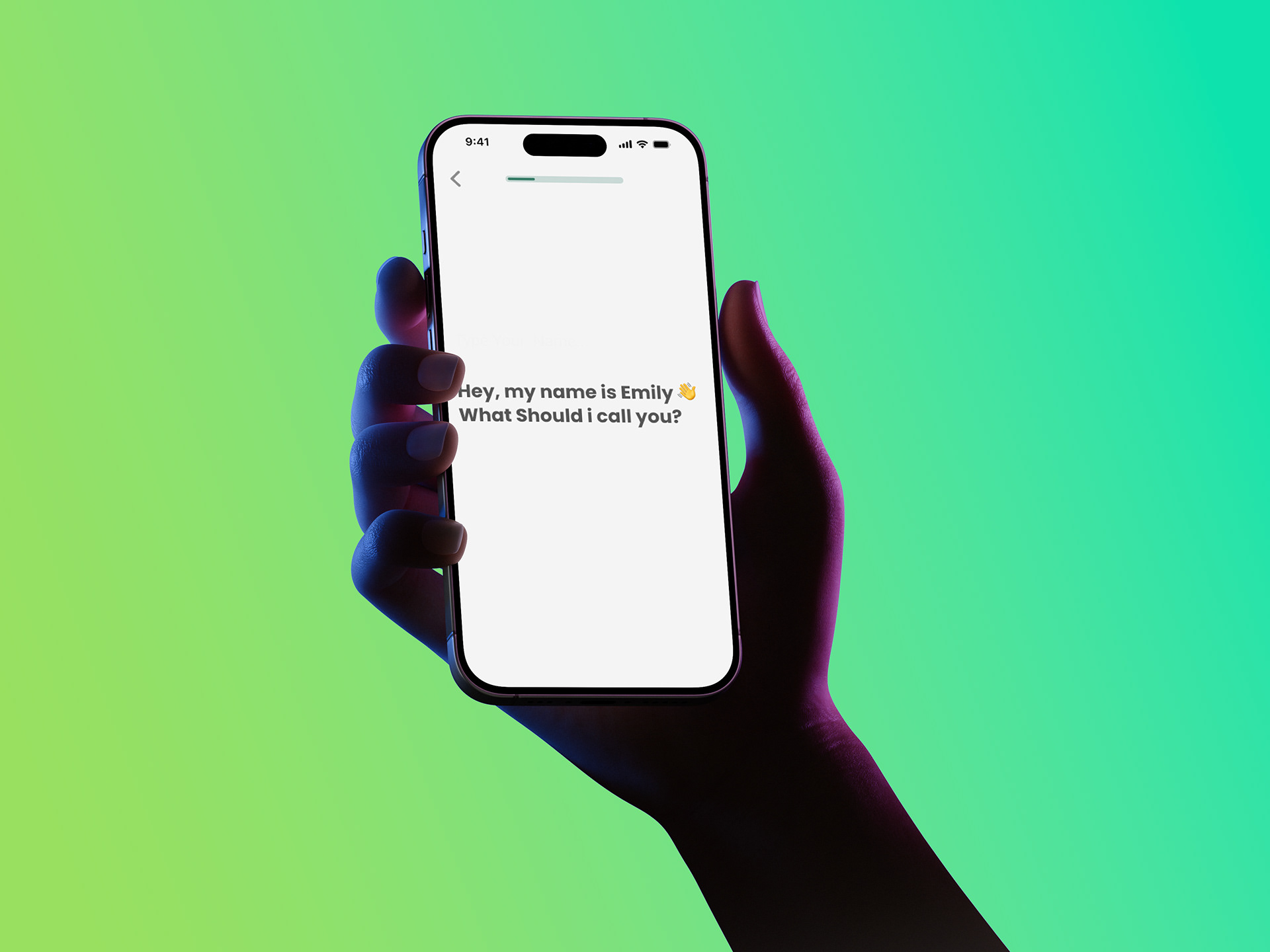
ReBrath by Xoltar
2025
Digital Health, AI Agent, Behavioral Design, CBT Approach, Onboarding Experience, Habit Change.
EV Charging App
2024
EV Mobility, Smart Charging, Route Planning, Energy Analytics, Real-Time Data, Automotive UX.
© 2026 Yoad Madmoni. All rights reserved. Designed and developed by Yoad Madmoni.
one&two
Improving Access to Public Restrooms in Urban Environments.
My Role
Co-Founder & Product Designer
Team
Co-Founder (Business & Strategy)Product Designer (Me)
Timeline
2024 – 2025
Project Duration12 Months
Project Type
Startup | Mobile Consumer Product | MVP

Product Description
One&Two is a location-based mobile application designed to help users easily find, access, and navigate to clean and reliable public restrooms in urban environments.
Personalized Accessibility
During registration, users answer a few questions to match restrooms to their needs. For example, people with disabilities find accessible facilities, and parents locate restrooms with changing stations. The system learns user habits to improve future searches.
Real Time Map Interface
One&Two provides 24/7 support to help you find restrooms wherever you are. Its interactive map updates in real-time and lets you choose between three options:
- Nearby: the closest available restrooms.
- Quality: the highest-rated, cleanest restrooms.
- Favorites: places you’ve saved and want to visit again.
You can filter by accessibility and availability, and get clear directions perfect for emergencies or exploring new areas. One&Two ensures a smooth, stress-free experience anytime.
Instant QR Access for Restrooms
One&Two makes restroom access easy with its instant QR code feature. After choosing a restroom in the app, you get a unique QR code to unlock the door with a quick scan. This gives you fast, smooth, and contactless entry saving time and avoiding hassle.
Hygiene Products Store Feature
Users can discreetly buy hygiene products like wipes, toilet paper, soaps, and sanitizers directly through the app while in the restroom. The service is available 24/7 thanks to partner stores that work with the app. This ensures easy access to essentials anytime, especially in cities, while keeping the experience private and comfortable.
User Ratings and Incentives
One&two uses gamification to boost engagement. Users rate restrooms, earn points, and get rewards like:
- Custom Toilet Skins: unlock fun virtual toilets, from basic white to golden, as they stay active.
- Store Discounts: get vouchers for local businesses.This keeps users involved and loyal to the app.

Case Study
The Problem
The idea for One&Two originated from a personal experience. During a busy day in Tel Aviv, I struggled to find a clean and accessible public restroom. Despite being in a dense urban area, none of the available options met basic hygiene or accessibility expectations.
This experience exposed a broader systemic issue: even in modern cities, users struggle to locate reliable public restrooms. Existing solutions lack real-time accuracy, hygiene standards, accessibility filters, or transparent pricing. For vulnerable groups such as parents with babies, tourists, and people with disabilities, this becomes more than an inconvenience it becomes a daily friction point that impacts comfort, mobility, and time efficiency.
Target Audience
- Parents with babies and toddlers
- Tourists unfamiliar with the city
- Urban professionals far from home
- People with disabilities
Survey
What should we focus on to improve restroom accessibility and hygiene in urban areas?
Starting with user behavior analysis and urban infrastructure studies, I began to understand the gaps in restroom availability and accessibility. Additionally, I uncovered a growing need for real-time solutions tailored to diverse user groups, highlighting opportunities for a more inclusive and efficient system.
Demand for Public Restrooms
Participants reported low comfort levels in public restrooms, emphasizing the need for improved maintenance and hygiene. Even in commercial locations, there is room for improvement in cleanliness and accessibility.
Challenges Identified
Key issues include:
- Lack of Hygiene: Dirty facilities and bad odors.
- Difficulty Locating Restrooms: Particularly in unfamiliar areas.
- Shortage of Supplies: Essentials like toilet paper and hygiene products are often missing.
Willingness to Pay
Participants are open to paying 2-5 NIS for access to clean restrooms, validating the app's pricing model.
Accessibility and Inclusiveness
Many facilities are not suitable for people with disabilities or families. Participants highlighted the need for improved accessibility and features like diaper-changing stations.
Opportunities for Improvement
Suggestions included:
- Enhanced hygiene standards.
- More accessible and strategically located facilities.
- Real-time updates and user feedback integration.
Opportunities for One&Two
- User-Centric App: Real-time updates, cleanliness ratings, and tailored recommendations.
- Community Engagement: Encouraging feedback and offering incentives for user contributions.
- Business Integration: Partnering with businesses to provide restrooms and boost customer traffic.
- Complementary Services: Dispensers for hygiene products in restrooms.
Why One&Two Stands Out?
For Users: A seamless way to find clean, accessible restrooms. For Businesses: A tool to increase visibility and revenue.For Communities: Improving urban hygiene and accessibility standards.One&Two bridges critical gaps in public restroom services, creating value for users, businesses, and urban communities alike.
Key Takeaways:
- 2theloo focuses on providing clean restrooms with basic hygiene product availability but lacks digital integration and accessibility features.
- One Hundred Restroom excels in premium hygiene and accessibility but is limited by location and high costs.
- Google Maps provides global location services but lacks detailed restroom-specific features like cleanliness, accessibility, and feedback.
- One&Two combines the strengths of all competitors, providing a comprehensive platform for clean, accessible restrooms with transparent pricing, integrated hygiene solutions, and user-driven feedback.
This comparison highlights One&Two as a user-focused and community-driven solution designed to fill the gaps left by existing services.
User Persona & Journey MapBased on the personas provided, we identified distinct user groups with unique needs and challenges when accessing restrooms. These personas helped shape the solutions and features offered by One&Two
Key Insights
Fast Access to Restrooms
In my research, I discovered that users especially elderly people, parents with babies, people with disabilities, and tourists often search for public restrooms in stressful situations where time is critical. The speed of finding and accessing restrooms directly affects user satisfaction and their willingness to use the app again. To solve this, I designed a smart map with a one-click quick search for nearby restrooms, including real-time availability filters.
Clear Accessibility Information
My research showed that very few public restrooms are truly accessible for people with disabilities, creating discomfort and stress in urban environments. Parents with strollers, elderly people, and people with special needs must know in advance if a restroom is suitable for them. Trust and repeated use depend on clear, reliable information about accessibility and available facilities, such as baby changing stations or wide doors. To address this, I developed a clear tagging and icon system that instantly shows accessibility levels, with filters for personal needs giving users confidence and reducing uncertainty in unfamiliar places.
Easy Access to Hygiene Products
Many users especially women feel uncomfortable when they run out of hygiene products like tampons, pads, or wipes, and buying them in public spaces can feel awkward or inconvenient. Easy access to hygiene products inside restroom areas increases comfort, safety, and usability, especially in unfamiliar urban environments. I added a feature that shows whether a hygiene dispenser is available in the restroom and its exact location. I also included an option to rate product availability and report when items run out, ensuring reliability and convenience for all users.
User Persona & Journey MapDuring my initial design process, I create a flow that outlines user interactions and identifies key user needs. Then, I move on to Design Exploration, experimenting with various sketches, styles, and visual approaches.
Lo Fi WireframsI produced wireframes for multiple design variations for testing and feedback.
Visual Style
I chose the combination of blue and white to convey a sense of cleanliness, order, and high aesthetic reflecting the ideal experience I want users to feel when entering a clean, welcoming public restroom. Beyond the visual clarity, this color pairing is also symbolic: blue and white are the national colors of Israel, subtly referencing the cultural origin of the project. This choice creates both a visual and emotional connection, while supporting an interface that feels bright, trustworthy, and accessible.
© 2026 Yoad Madmoni. All rights reserved. Designed and developed by Yoad Madmoni.